
Quick answer
Use 해요체 (-아요/-어요) for everyday polite speech and 하십시오체 (-습니다/-ㅂ니다) for formal settings. Korean describes six traditional speech styles. The ending shows how you address the listener, while markers such as -시- can honor the person you are talking about.
What does jondaetmal mean?
Jondaetmal (존댓말) is the everyday name for respectful or polite speech. Start by noticing how sentences end. 지금 가요 and 지금 갑니다 can both mean “I’m going now.” The first is everyday polite. The second sounds more formal. 지금 가 is casual speech you might hear between close friends.
What are the six speech levels?
| Style | Example | Where you might hear or read it |
|---|---|---|
| 해요체 | 가요 | Everyday polite conversation with strangers or new acquaintances |
| 하십시오체 (합쇼체) | 갑니다 | Presentations, announcements, and formal introductions |
| 해체 | 가 | Casual conversation between people who are comfortable using it |
| 해라체 | 간다 | Plain narration or writing. In direct conversation, use depends on the relationship |
| 하오체 | 가오 | Older-style or period dialogue |
| 하게체 | 가네 | Some speech from an older or senior person to a younger adult, or stylized dialogue |
The examples all use the verb 가다, “to go.” For a first conversation, learn 해요체 first. It covers many everyday requests, from 물 주세요 (“Water, please”) to 여기 앉아도 돼요? (“May I sit here?”).
What is the difference between -요 and -시-?
In 선생님이 와요, the ending -요 makes the sentence polite to the listener. In 선생님이 오세요, -시- (seen in the contracted form 오세요) also shows respect toward the teacher who is coming. And 께 can mark an honored recipient, as in 선생님께 말씀드렸어요 (“I spoke to the teacher”). One sentence can express respect in more than one direction.
When can I switch to banmal?
Keep the polite style while getting to know someone. If both people want to switch, you may hear 우리 말 놓을까요?, roughly “Shall we speak casually?” A friend can agree to casual language in private and still use a polite style at work or in front of customers.
In photos
Related videos
- When to use honorifics or polite words
Talk To Me In Korean. Listen for how the relationship between speakers shapes polite language.
Related terms: 존댓말, 높임말, 해요체, 하십시오체, 합쇼체, 해체, 반말
Sources and image credits
- National Institute of Korean Language, explanation of the six speech styles
- Korean–English Learners’ Dictionary, 상대 높임법
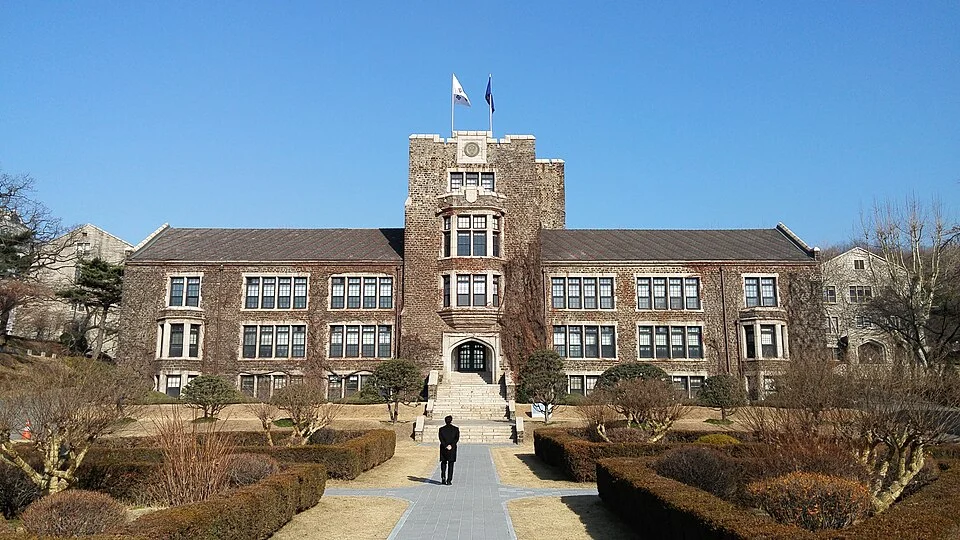
- A university campus is one setting where students may use sunbae and hubae. Christian Bolz /CC BY-SA 4.0 / Resized
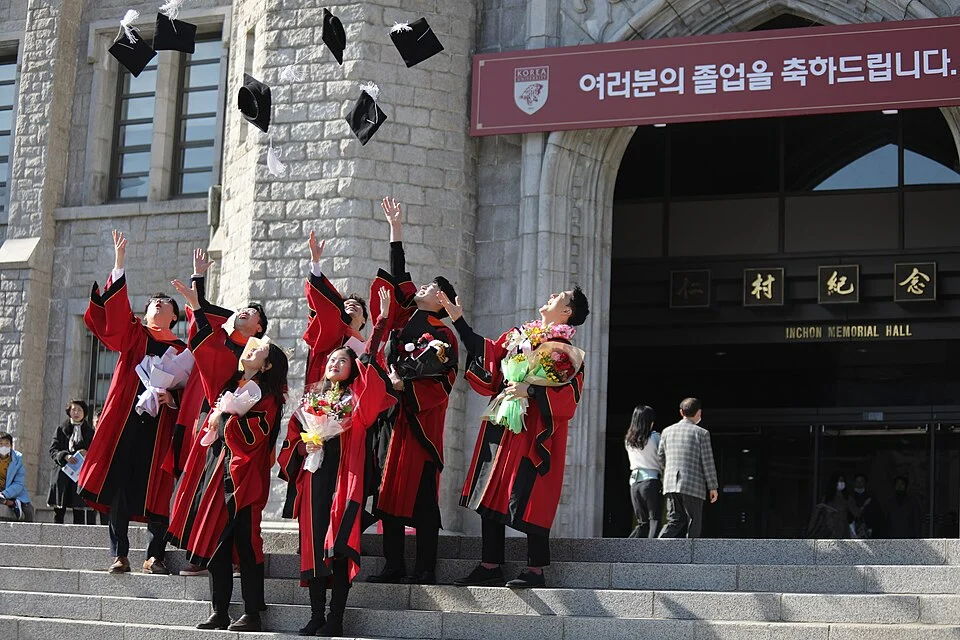
- At university, an earlier cohort can include students and alumni. Korea University Business School /CC0 1.0 / Resized
- Office forms of address vary by team. The photo shows a workplace in Seoul. Estheim /CC BY-SA 4.0 / Resized


