
Quick answer
Take your outdoor shoes off when entering a Korean home. A lower entry area and a raised interior floor are common clues. At restaurants, hanok stays and public venues, look for a shoe rack, posted instructions or a cue from the host.
Why does the entryway matter?
At many homes, the entrance has a lower area where outdoor shoes stay and a raised floor where indoor life begins. Korean home life has long included sitting, eating or sleeping close to the floor. Floor heating, known as ondol (온돌), also helps explain why the floor is treated as part of the living space.
What should I do at someone’s home?
Stop in the entry area, take off your shoes and leave them together out of the way. If the host offers slippers, follow their lead. Some homes have a separate pair for the bathroom. If you see slippers inside that room, leave them there when you come out.
Do the same rules apply to restaurants and hanok stays?
It depends on the space. At a restaurant with raised floor seating, a shoe rack or a step can signal that shoes come off for that section. At a hanok stay, ask where you should switch to indoor footwear and whether the courtyard is treated as outdoors. Public sites may have their own signs for rooms and exhibits.
How can I ask politely?
여기서 신발 벗으면 돼요? (Yeogiseo sinbal beoseumyeon dwaeyo?) means “Should I take my shoes off here?” Use it at the threshold if you are unsure. At a friend’s apartment, pausing at the entrance gives the host time to show you where your shoes go.
In photos
Related videos
- A walking tour of Bukchon Hanok Village
Seoul Walker. A look at the outside of homes in a working residential neighborhood.
Related terms: 신발, 현관, 온돌, 한옥
Sources and image credits
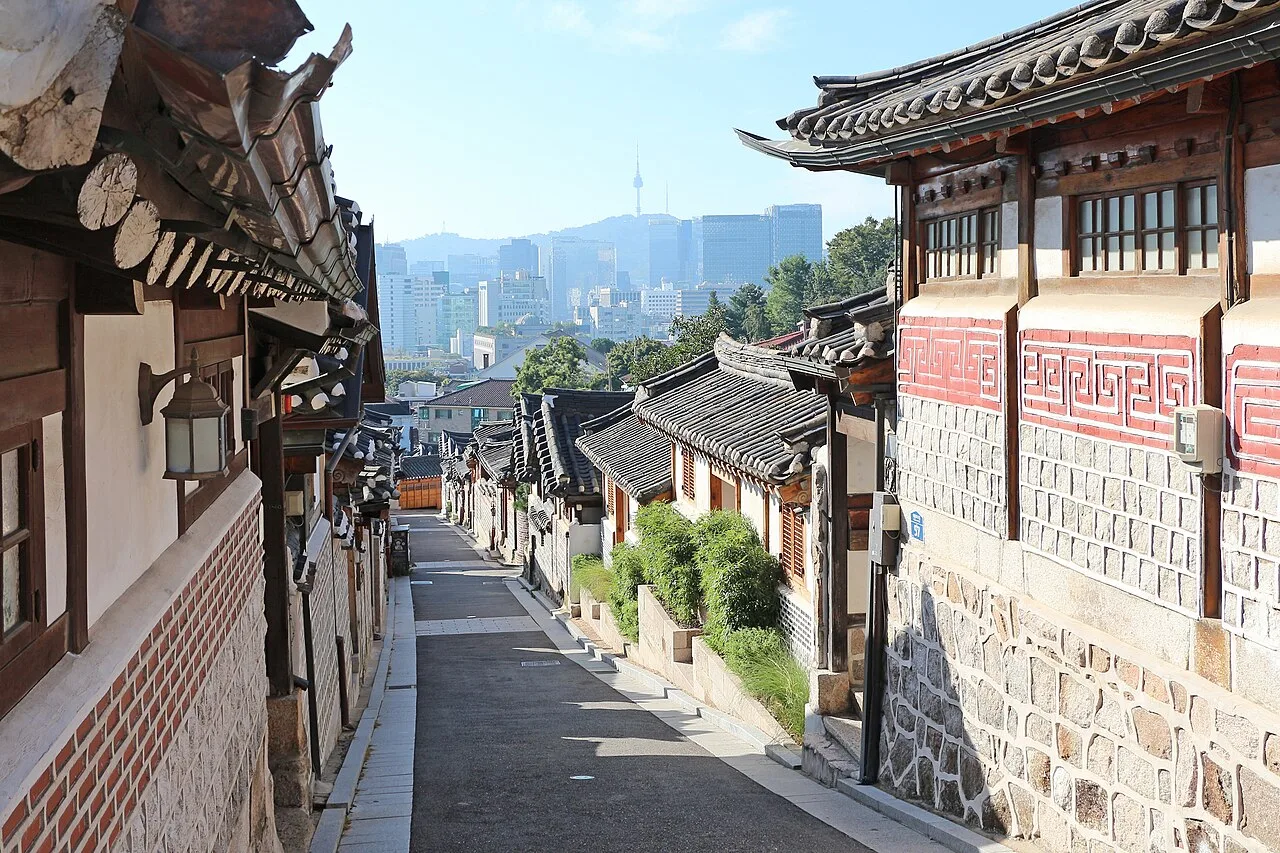
- Hanok roofs and the modern Seoul skyline in Bukchon. Bernard Gagnon /CC0 1.0 / Resized
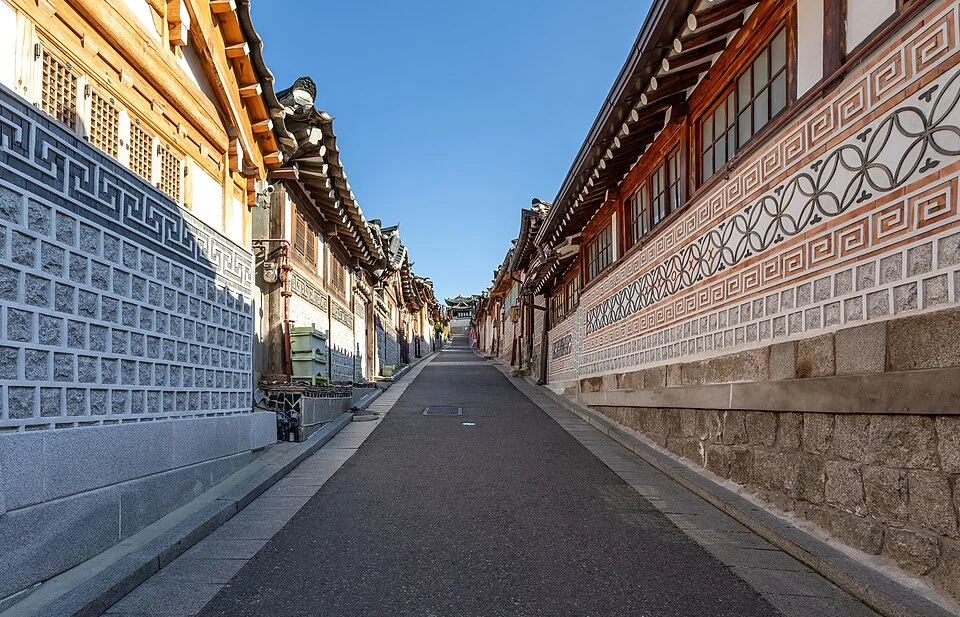
- Bukchon-ro 11-gil is the street to look for on the city’s Red Zone map. Basile Morin /CC BY-SA 4.0 / Resized
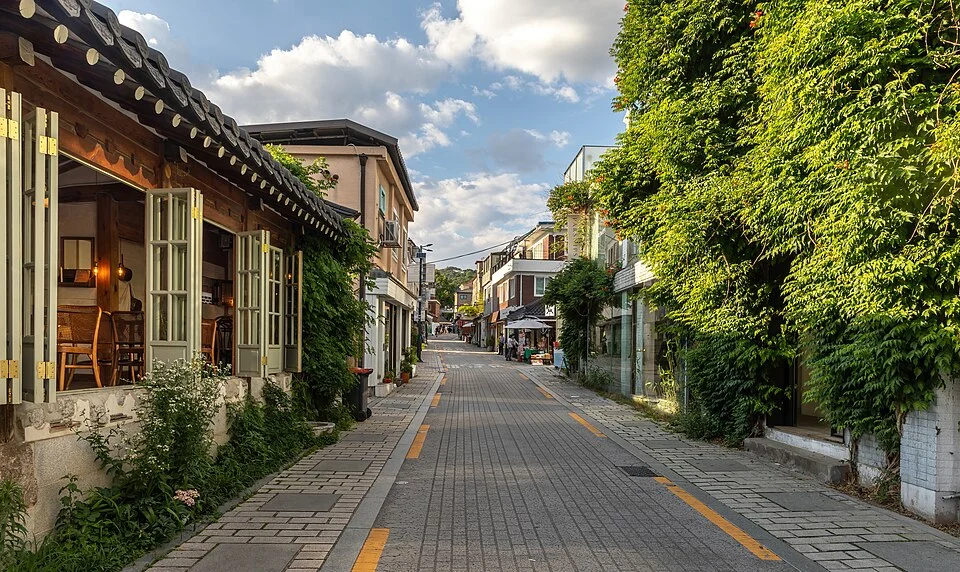
- Gyedong-gil is the street that leads to the culture center from Anguk Station. Basile Morin /CC BY-SA 4.0 / Resized


