
Quick answer
Jeju haenyeo are women who make a living harvesting seafood by breath-hold diving. Their knowledge includes reading the sea, identifying what to gather and working within a community. UNESCO added their culture to its intangible heritage list in 2016.
What do Jeju haenyeo do?
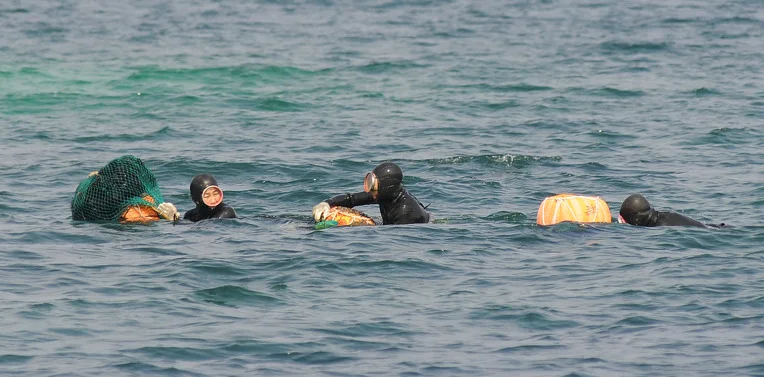
Haenyeo (해녀) are women who dive on breath holds to collect marine life such as abalone and sea urchins. On Jeju, the term also brings to mind the relationships that make that work possible. Divers need to learn where to enter and leave the water, how a site changes with tide and weather, what is in season and how much effort a particular dive requires. Most of those decisions happen before there is anything to show in a catch basket.
A photograph can make the work look still and solitary. A diver on the surface, however, is only one part of a fishing day. Preparation on shore, decisions about whether to go out and the handling of the catch are part of the same work. The float a visitor sees from shore can help locate a diver. It gives the visitor no reliable indication of whether a route through that water is safe for swimming.
What is sumbisori, and how do divers learn?
Sumbisori (숨비소리) is the sound haenyeo make as they surface and breathe. The sound carries over water. If you hear it in a recording, pay attention to when it occurs in relation to a dive rather than trying to imitate the breathing technique. A museum recording can make an aspect of the work audible even when no one is diving during your visit.
Visit Jeju describes three groups based on experience: hagun, junggun and sanggun. Experienced divers guide others. The progression involves judgment as well as skill in the water. Knowing when to end a dive, where conditions are changing and how to work around other people matters to a group making repeated trips below the surface. Families, fishing cooperatives, associations and training programs are among the places where knowledge is passed on.
What did UNESCO recognize?
The culture of Jeju haenyeo entered UNESCO’s Representative List of the Intangible Cultural Heritage of Humanity in 2016. The recognition concerns knowledge and practices carried by people, including the transmission of skills and community participation in managing fishing. If you are planning an island visit around UNESCO entries, keep this separate from the designations that apply to physical features such as volcanic landscapes. A museum about the divers and a walk around a crater answer different questions about Jeju.
The work also has a history outside a single beach. Visit Jeju documents divers traveling from Jeju to work in other areas of Korea and overseas. That helps explain why a photograph labeled “haenyeo” may show a different place or period. Look at the caption, date and location before using a picture as evidence of an island-wide custom.
How can you learn about the divers as a visitor?
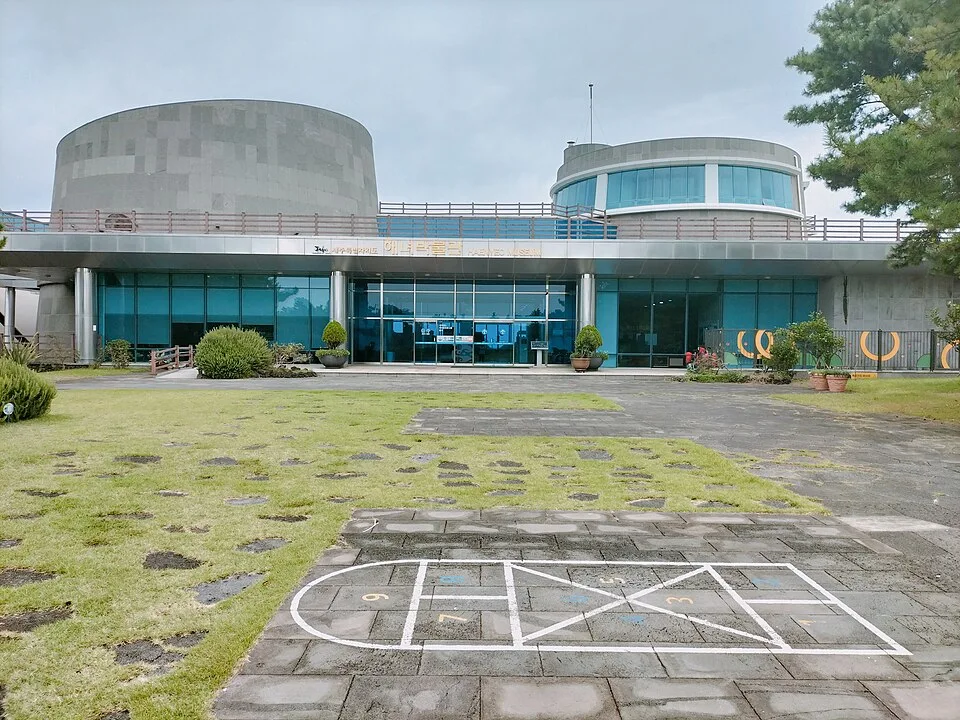
Start at the Haenyeo Museum in Gujwa on eastern Jeju. Give yourself time to look at the tools alongside the explanations of fishing and household life. If you learn the purpose of a float, a gathering tool and the equipment worn in the water first, the objects in photographs and the scenes in dramas become easier to read. Confirm the museum’s opening schedule before setting out.
If you continue to the coast, follow public paths and leave space around boats, gear and landing points. A working diver may have to carry a catch or get out of the water before a swell arrives. Ask before making close photographs. A scheduled demonstration, an exhibition and a working day all offer different kinds of access. Weather and local schedules matter, so plan an inland stop you would enjoy if the sea visit changes.
What does the drama show?
In When Life Gives You Tangerines, Ae-sun’s mother is a diver. Her work helps viewers understand the family at the start of the story. The drama gives the occupation a place in a family narrative. For the equipment, vocabulary and ways the work is organized, compare what you remember seeing with the museum’s explanations and the photographs below.
What should you look for in a museum display?
Read the label beside a tool before deciding how it was used. A piece of gear shown next to a photograph can make more sense once you know where the diver rests or keeps the catch. Compare images from different decades and notice what changes around the diver as well as what she is wearing. A newer picture may show different equipment while the purpose of the work remains recognizable.
If you are visiting with children, pick one question for each space: How does a diver mark her position? Where does the catch go? Who teaches a beginner? These questions connect a tool to a person’s action and help explain why a display about work includes objects that are simple enough to miss at first glance.
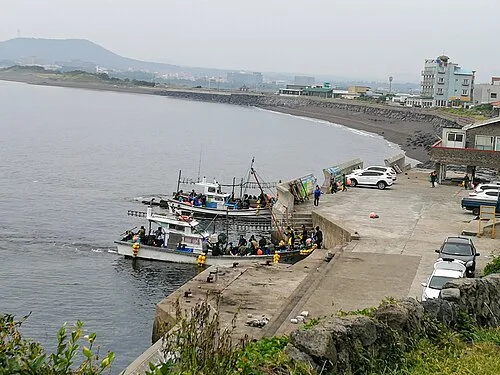
The museum and the shore also work well in the opposite order if your group is already near the coast. Note the equipment you can see from a public path, then use the exhibits to identify it. A photograph of boats at Seongsan helps place the work in a landscape, while a photo of divers gives you a closer view of the people and equipment. Neither picture tells you when someone will next be working at that spot.
In photos
Sources and image credits
- Haenyeo in the water. 김형찬 /CC BY 2.0/KR / Resized
- Boats off Seongsan Ilchulbong in Jeju. Teemeah /CC BY-SA 4.0 / Resized
- The Haenyeo Museum in eastern Jeju. Vanbasten 23 /CC BY-SA 3.0 / Resized


